
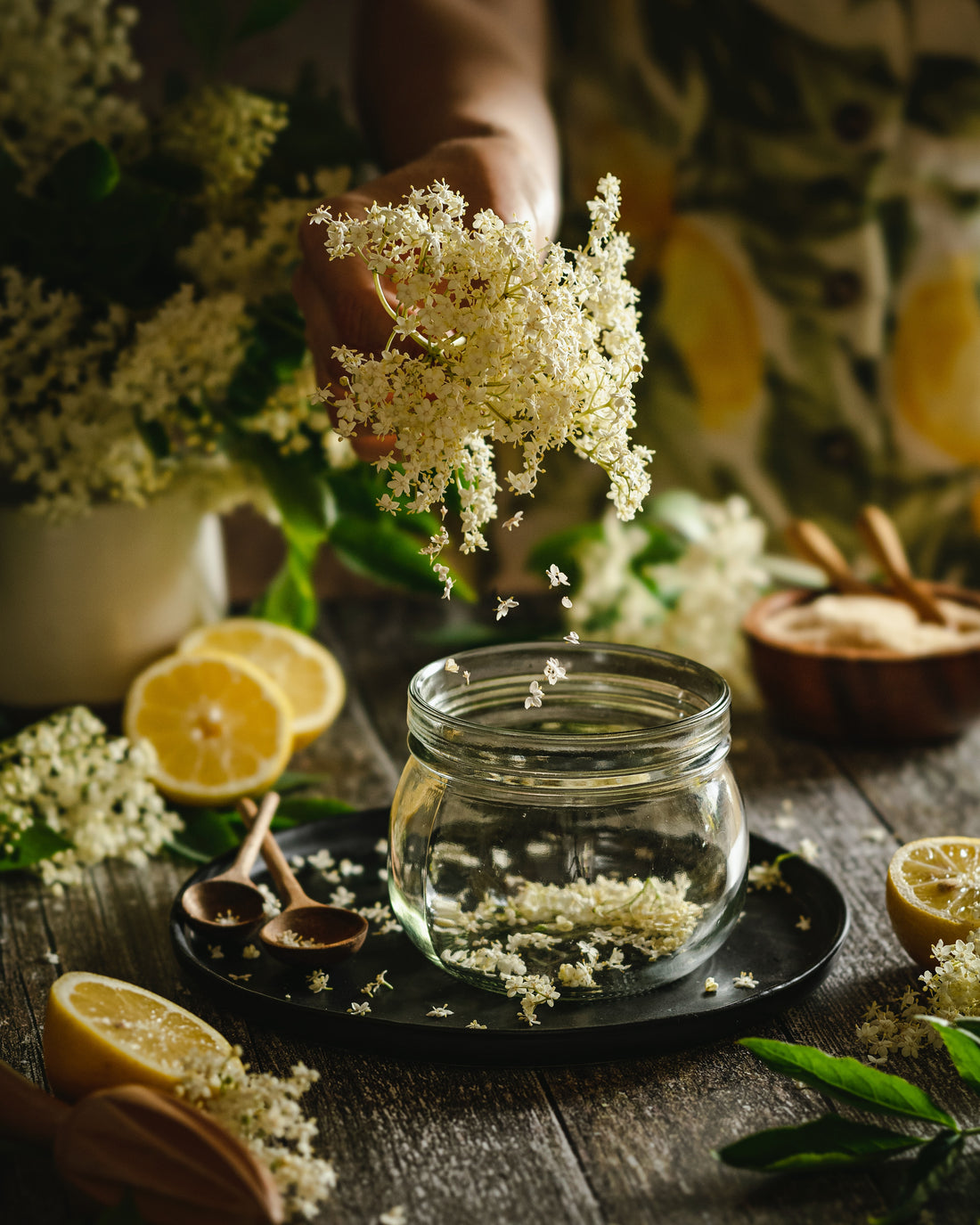
The history of the elderberry is ancient and full of symbolism. Native to Central Europe, in Portugal it is found spontaneously as a shrub or tree reaching between 2 and 5 meters in height, preferring humid and shadier areas, near watercourses.
Traces of this plant have been found in archaeological excavations from the Stone Age, and there are records of its use by the peoples of ancient Greece and Rome. It was considered a sacred tree, adored and respected by various peoples and cultures, and was present in the folklore of Scandinavia, Russia, Germany, and Celtic culture.
With its flowers that provide nectar for a wide variety of insects and berries eaten by birds and small mammals, it is an important plant for wildlife.
Properties of Elderberry
Elderberry is an extremely versatile plant, and its flowers, leaves, ripe fruits, and inner bark can, after proper treatment, be used for medicinal purposes.
The inner bark is used as a laxative and for its emetic effect, the leaves for treating wounds, sprains, and headaches.
However, nowadays, it is mainly the flowers and berries that are used for medicinal purposes. The flowers are widely used in infusions and are believed to relieve symptoms of sinusitis, colds, allergies, and strengthen the immune system. You can find them in our mint, elderflower, and lemon infusion. The berries are attributed antiviral and immune system stimulating properties. They are often used in the making of liqueurs and in the production of pies. It is important to note that this fruit is toxic if consumed raw.
Many therapeutic properties are attributed to this tree; however, to date, no scientific studies have been developed to prove them.
Uses of Elderberry
With very resistant wood and great regenerative capacity, elderberry wood has never been used for commercial purposes.
In the past, its components were used for dyeing. Blue and purple colors are obtained from the berries, green and yellow from the leaves, and black from the bark.
Symbolism
Curiosities
Elderberry leaves have a strong aroma and, after dehydration, were once used as a tobacco substitute.
Sources:
Seleções do Reader’s Digest, Segredos e Virtudes das Plantas Medicinais, 1983
Elder (Sambucus nigra), Woodland Trust UK, available at https://www.woodlandtrust.org.uk/trees-woods-and-wildlife/british-trees/a-z-of-british-trees/elder/ , accessed on 07/11/2023